Dave Horn

Dave Horn

E-mail: This e-mail address is being protected from spambots. You need JavaScript enabled to view it.

Tuesday, February 12, 2013 10:45 AM

The death of the analog mixing console

AddThis Social Bookmark Button

Winter NAMM 2013 - mark it.  The era of the analog mixing console for the worship setting is over. 

With the announcement and introduction of new products, the demise of analog became apparent toward the end of 2012, and confirmation came just last month at the Winter NAMM show in Anaheim, CA. 

Before I go much further, let me state that I realize that the analog console remains a viable option if you need a very small mixer, and that analog is also very viable in a studio setting for recording.  The thrust of Geartechs is technology for worship, and in the worship setting, in sizes of 16 channels or larger, the analog console is most often not your best choice. 

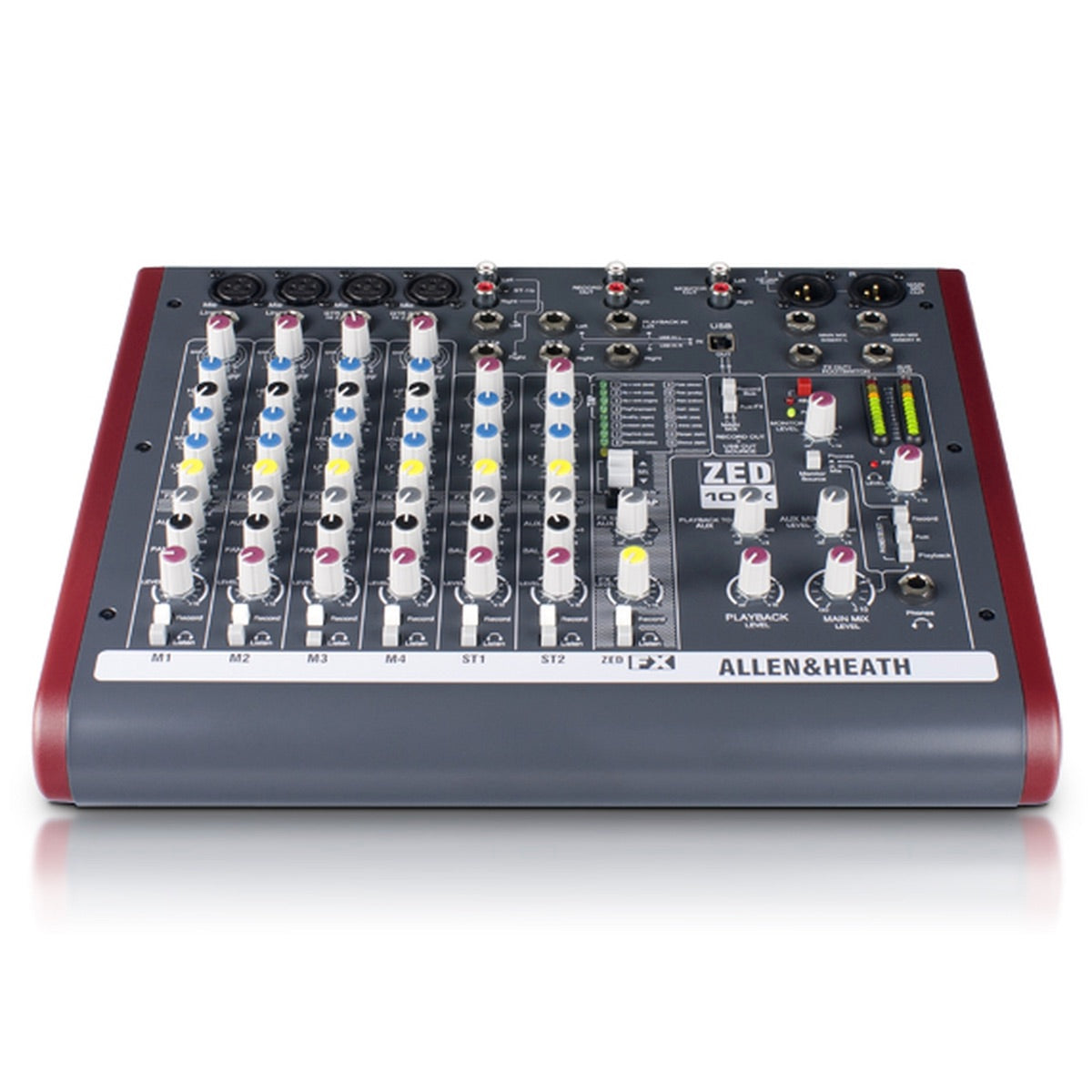
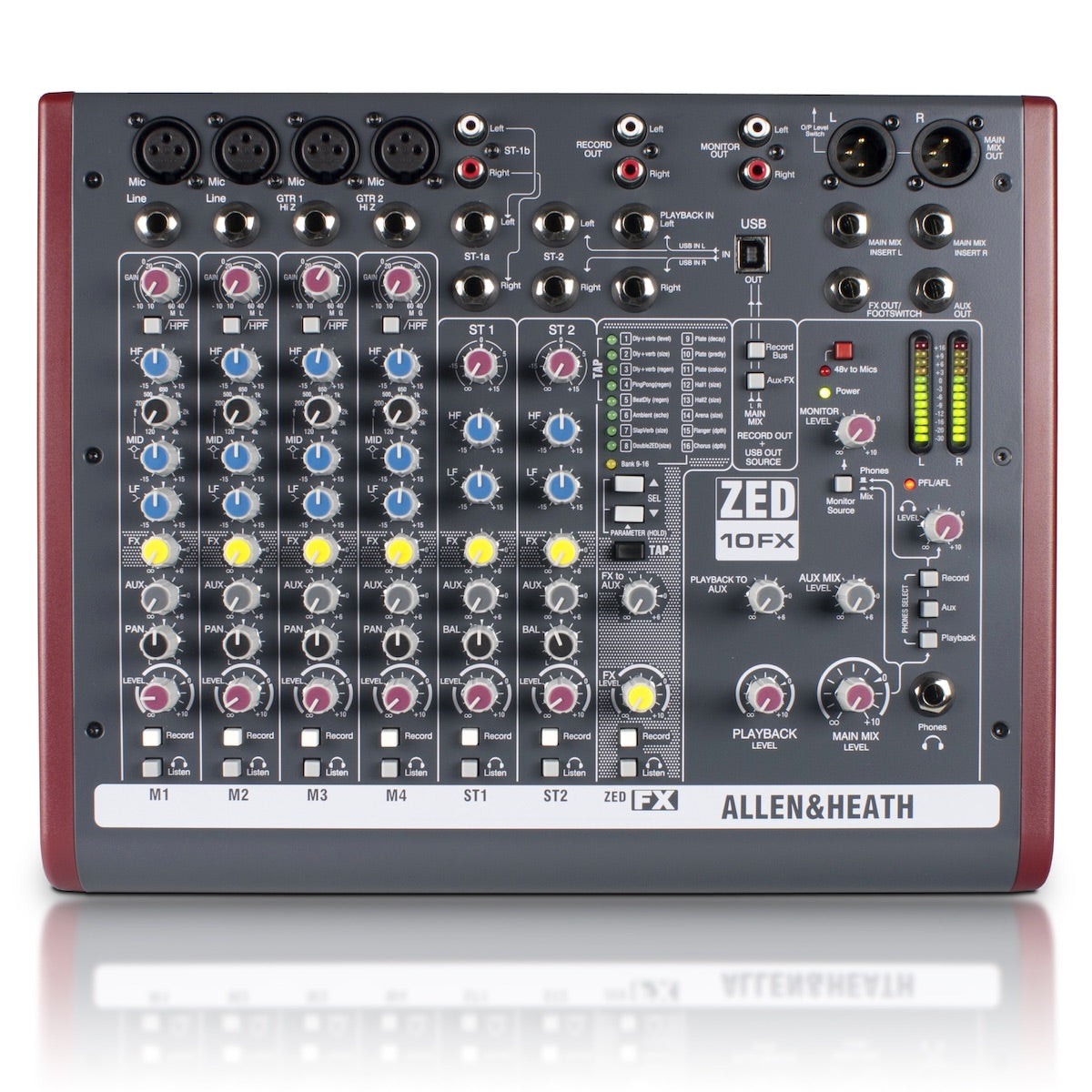
Virtually every mixer manufacturer had something new to show at NAMM.  Presonus, Soundcraft, Line 6, Behringer, Roland, Allen & Heath, Midas, Digico and others showed us all the reasons that you should buy a digital console. 

Back in December of 2009, when the Presonus StudioLive 16.4.2 was released, I wrote an article about the fact that buying a digital console was like getting the mixer itself free.  That statement is even more true today. 

Factor out the advantages of the consoles themselves (settings recall, per-channel parametric equalization, iPad control, virtual soundcheck, multi-track recording, and more), and you'll find that just the 22 compressors in the StudioLive are worth $112.38 each (1/8 the cost of the Presonus ACP-88). That's nearly $2500 in compressors against a mixer that costs $1999 normally and is on sale through the end of March for $1799.95.  Don't forget that every output has a 31-band graphic EQ, that you have two stereo effects processor built in, and that the features are all housed in a fully-functional digital mixer.

The story is similar for all digital console manufacturers.  The benefits of owning a digital mixing system far outweigh the costs, no matter whose mixer you select.  Mike Sessler from Church Tech Arts recently published a 4-part series comparing three of the leading small-to-mid-sized digital mixers from Roland, Presonus and Behringer.  Make sure to take a look. 


Digital Mixer Comparison: M200i, X32, StudioLive 24.4.2—Pt. 1

Digital Mixer Comparison: M200i, X32, StudioLive 24.4.2—Pt. 2

Digital Mixer Comparison: M200i, X32, StudioLive 24.4.2—Pt. 3

Digital Mixer Comparison: M200i, X32, StudioLive 24.4.2—Pt. 4

We offer a variety of digital consoles.  If you'd like to discuss the application of digital mixing in your setting, please call us. 

Friday, December 21, 2012 03:35 PM

Words of encouragement

AddThis Social Bookmark Button

On this snowy winter Friday (a rarity in Columbus, Ohio), I'm still working on our last day of business before Christmas, and I am enjoying the quiet.  The phone isn't ringing, and all I can hear is wind, the whir of the hard drive in my iMac, and the furnace blower.  So far, I've posted a couple articles to the website and am reflecting on another year. 

2012 was our 21st year in business.  When I started by myself back at the end of 1991, I had no idea what was ahead.  My dad encouraged me to "do something you love, so that it doesn't seem like work."  The idealist in me latched onto that encouragement and that conversation with him keeps me going, even on the days that I don't love it.

Today, I've received lots of additional encouragement that keeps me loving the business.  Thank you to those of you who took a minute to send your words.  I cherish those emails. 

It's really nice to hear things like "You make what we do possible Dave. Thank you for YEARS of professionalism, expertise and support!!!  You are the best!" and "Thanks for all your help and service throughout the years" and "Thank you, for giving freely of your time and experience. We appreciate you." 

I received about 10 similar messages today, and they made my day.  These affirming words will send me into this Christmas celebration feeling even better about the mark we've been able to leave, and the work we hope to continue.  

If you get a chance today, send some words of encouragement to those you value.   Let them know what they mean to you.  It will make their day. 

Wednesday, December 05, 2012 01:09 PM

It sounds awesome. 150 percent improvement.

AddThis Social Bookmark Button

Several days ago, my phone rang. I noticed that the caller was one of my friends from West Virginia, but he was calling from North Carolina. With church staffers, that change is not always a good thing, but he assured me that it was.

He let me know that he was the new worship pastor, and that he had a problem with the sound system. When pastors get to new churches, they often need new equipment. That's generally a good thing for us.

I asked him to take me on video "tour" of the new facility, so he whipped out his iPhone and we talked as he walked me around the room. The church had a system already, it was installed well, and the room had the right acoustical treatments in place, but the system sounded bad.

Then he walked me back to the mixer. Again, nothing out of the ordinary. Wiring maybe? Improper wiring polarity (+/- inversion) can create phase cancelation, but I wasn't sure how I'd have him test for that easily, and North Carolina makes for a long service call. I do need a vacation. Hmm...

The short story is that I noticed that he had a system processor (equalizer, compressor, crossover). I asked whether he had could access the settings, and he could. He emailed me the file, I looked at it and described back what I thought the system sounded like, based on the settings. "Hollow?" Yes. "Muddy?" Yes. "Lack of presence in voices?"  Yes.  

So I got to work. With caution, I changed the crossover point and slopes, along with some changes to equalization. I made sure that he saved the original file (and I did, too), in case I made a worse mess of things. And then I emailed the file back to him.

I didn't hear from him Monday after the first Sunday and forgot about it the rest of the week. I didn't hear from him after the next Sunday either. I thought that maybe that was a good sign, but I did make a note to call him. And then he emailed me.

"Dave, Thank you so much for that work you did on that processor file. It sounds awesome. 150% improvement."

That made me smile.

Sometimes, we can make a quick change like we did for my friend in North Carolina. Other times, we can recommend a high impact product like a great earset microphone for your pastor, or a system processor that will help you set up your system on your own.

If you're having issues, please call us. Real people answer the phone at 800-747-7301.

Monday, December 03, 2012 06:59 PM

Run to finish the race well

AddThis Social Bookmark Button

I'm not going to tell you that it'll be easy, but I will tell you that it'll be worth it.  When we discuss adding technology to the worship setting, we do our best to always communicate the importance of proper planning and preparation.  Does it take time?  Is it easy to think through your needs?  Would you rather be doing something else?  Yes, no, and probably. 

The Monday after Thanksgiving the world woke up to the fact that, despite President Barack Obama's re-election and Hurricane Sandy's devastation of the expanded New York City metroplitan area, Christmas was still less than a month away.  Oddly enough, the calendar didn't stop for those events. 

For the month before Thanksgiving, we had a mix of business as usual and of the wait-and-see type.  It was the wait-ers who woke up last week in a panic, and that's not good.  At this time of year, it's not unusual to have product shortages and/or events that take place pre-Christmas for which the need is critical.  It's also not so unusual for some of the wait-ers to hold off until the very last minute for whatever reason. 

And sure enough, on Friday night at 6:30PM, I got the call on my cell phone, "Hey Dave, I'm in a bit of a sticky situation, and I need your help.  Our first service is Sunday, and I need a _______."  Our warehouse was closed.  Our suppliers were closed.  Fedex and UPS don't pick up on Saturdays. 

For a 4-5 weeks prior to that Friday evening, we tried to get that church to come to the planning table.  We literally pleaded with them to think through their self-install with us, and our advise went unheeded. 

Just to show you that it doesn't have to be this way, let me share another story.  Also on Friday night, I enjoyed the town square Christmas tree lighting in the town where my sister and her family live.  Afterwards, I ran into the pastor of a church for which we installed a sound and video system about six months ago.  Despite a couple follow-up phone calls from me, I hadn't heard from him since a couple weeks after the system was installed, and I asked him how things were going.  He said, "Great. Everything is working just as we'd expect, and we're very pleased." 

Plan ahead.  Make sure that you buy the right product.  Allow yourself enough time to get the gear installed, to learn how to use it, and to make sure that it meets your needs.

The Message of Christmas is too important to trust to chance.  We're all busy, but don't let yourself get stuck without options when a dose of advance preparation could have saved the day. 

Tuesday, November 20, 2012 04:12 PM

Fix it right!

AddThis Social Bookmark Button

Our recurring autumn blog theme seems to be helping you understand the cost of making wrong decisions.  I understand that it's tough to know what to do with all of the information that's out there.  My eyes glaze over when I think about how to invest my 401k money.  Just like they didn't teach about technology in seminary, they didn't teach much about investing in business school.

Fixing things correctly and helping you make "right" decisions is our goal.  A few weeks ago, we received a call from a church here in the Columbus area to see what could be done with their sound system.  The team there had brand new speakers, installed by another dealer, and things just didn't sound right.  No one could figure it out. 

These are difficult situations because we rarely get the benefit of understanding the circumstances surrounding the purchase and installation.  We only get to see and hear the end result. 

In the end, we installed a new amplifier and a system processor, reinstalled one of their power amplifiers that had been repaired, un-did some "unconventional" wiring, and tuned up the system with SMAART. 

The system sounds fantastic, but the church didn't need new speakers.  What we found is that their 20-year-old Crown Microtech series power amplifiers were heavily corroded on the inside and were just worn out.  Had the other dealer replaced the power amplifiers (a $2000 option) instead of installing new speakers with the old amplifiers (a $5000-6000 option plus the cost for the work we just completed), the church could have saved several thousand dollars. 

Friday, November 09, 2012 03:28 PM

Ask the question!

AddThis Social Bookmark Button

Today, I asked a question to which you'd think I should have known the answer, but I didn't.  At the point of needing to know, what were my options?  I could either pretend and hack my way through a situation, wasting time (and maybe money), or simply admit that I don't know everything and swallow my pride.  So I asked, and I got the answer.  We've all been there, right?!

October 2012 marked 21 years of business in Columbus, Ohio.  In that time, we have worked with thousands of people on just as many audio, video, and/or lighting projects.  Our team has between 8-35 years of experience, and I learn something new every day.  I often joke with our clients who work as solo pastors that "they don't teach 'this stuff' in seminary."  And they don't.  Off and on over the years, I've been approached about teaching a technology class at one of the local seminaries, but despite the fact that I think that it would be a practical course, it hasn't panned out. 

Thankfully, we're good at some of those things that either weren't taught in seminary, or that you've never done.  What's the proper way to solder a microphone cable?  Should I try to fix a microphone cable?  What type of earset microphone would work best?  How do I decide whether it's 'worth it' to buy the more expensive microphone?  Why shoiuld I pay more for an SM58 than a PG58, since they look the same?  How do you connect a DVD player to a video projector?  What does it mean to 'pull wire'?  Why is there a hum in my system after the electrician installed that new lighting fixture?  What's the best way to install a speaker?  What can I do to make my sound system sound better?  Why is there a purple spot on the screen?  Can I hook up a 70V speaker that that amplifier?  What is a 70V speaker?  How far away do I need to hang the projector from the screen?  Do I really know how to safely hang the projector, or should I pay someone to make sure that it's done correctly? 

Being a church staff person – whether a pastor, worship staff, or a tech director – is tough.  You need to have a very broad skill set.  Along the lines of technology, in addition to needing to know answers to the quesitons above, there's also management of volunteers and projects, set design, audio recording, preparing sermon notes for the projector, volunteer training, and the list goes on, and on. 

You have a job to do, and by answering your questions and providing the right solutions, we can help you do what you do best.  After 21 years here, I still learn new things every day.  If I can help you do the same, my day is complete, so ask the question!

Monday, November 05, 2012 01:59 PM

You might not need a new sound system, after all.

AddThis Social Bookmark Button

Saturday night, I woke up in the middle of the night with a revelation.  We'll call it an especially "small-R" revelation. 

Several weeks ago, our church purchased a new electronic drum kit.  And a new kit deserves new cables and new direct boxes, right?!  Ever since, the kick drum has sounded truly anemic, everywhere except the headphones.  It's been awful for me.  I recommended the kit, I bought the direct boxes. 

One weekend, one of our vocalists even asked me, "Dave, what happened to the kick drum sound?"  I told her that I didn't know for sure, and that I thought that maybe the kick sound for that particular electronic kit was not so good, but that I'd figure it out. 

Trust me, I've blamed everything from the drum beater to the trigger to the kit.  Finally on Sunday at 4:00AM, it dawned on me.  It was that direct box.  We've used the Rapco DB-100 direct box for years with pretty good results.  With the new drum kit, I threw in a couple new direct boxes, and those were the newer DB-1.  A-ha! 

In a moment of audio snobbery, I had had enough.  "No more cheap gear!" I promised myself.  In the middle of my 4:00AM fog, I thought, "New version, made in China, undoubtedly cheapened to make Rapco more money, a 'conspiracy.'"  I even considered what I'd say to the folks at Rapco and was planning how to do our own recall of the DB-1's from those of you who had purchased one. 

So Sunday morning, as we wrapped up sound check, I was again discouraged, and looked down to the channel strip where I had added +10dB of 100Hz, trying to make anything good out of the kick drum and just shook my head.  "Could that direct box really sound that bad?", I thought to myself. 

The first Sunday of each month, the choir sings.  I noticed that a few of the choir members were on their way in, so I checked those channels to see what adjustments I might need to make.  As you can expect, I use a high-pass filter (bass roll-off) on the choir mics to prevent feedback.  Just for kicks, I began to look at each channel just to see how those filters were set, and then it hit me. 

I quickly selected the kick drum channel, and what do you think that I saw?  The high-pass filter was set at 130Hz, for the kick drum. 

Unknowingly, and sadly unchecked, I was rolling off virtually all of the low frequencies that make a bass drum a bass drum.  I can hear my thoughts, "It's an electronic kit, it's plugged into the same channels on the console, nothing ever changes, why bother to check the channel settings?"

I wouldn't get to hear the worship band again until the first note of the worship set, and a rush of thoughts kept me distracted with myself.  "How could you have missed that?  Could it really have been so easy?  It took you how many weeks to figure that out?  How could you think the worst of one of your main suppliers?" and on and on. 

On about the fifth measure of the first worship song, I backed down my +10dB boost at 100Hz, as I rolled the high-pass filter down from 130Hz to 0Hz.  The sound came together quickly, and as it turned out, I added back +2dB at 100Hz.  The kick sound was perfectly solid and deep, just like it should have been all along.  

When something isn't right, take the time to figure it out, especially when what you're hearing doesn't make sense.  At about $35, the Rapco DB-1 is a great, inexpensive direct box.  No, it doesn't compare to a $199 Radial JDI, and if it did, there's be something wrong - maybe another conspiracy to make excessive profits by one of our suppliers.  Not a chance on the conspiracy part. 

With equipment, you get what you pay for.  The DB-1 works really well for electronic kick drum, as long as the sound technician has his head on straight. 

And we don't need a new sound system, after all. 

Tuesday, September 25, 2012 09:03 AM

Taking church back to school?!

AddThis Social Bookmark Button

Remember to breathe!  That's good advise, and as we're reminded today by our guest columnist Mike Sessler, it's also good advice to remember to pray.  Last week, we wrapped up the back to school and back to church "tech crunch" season. In all of its busyness, summer 2012 brought us a fantastic variety of projects, and all, in one way or another, stretched us to become better at what we do. Some days, we were lots more tired, too.

A trend that we're noticing is that churches are growing larger by becoming smaller. That seems counterintuitive, of course. I'm hardly a church growth expert, but many churches today have made a shift to take church (if you will) to the people, as opposed to trying to get people to "come to church." I think that it's working.

Just this Summer, we have worked closely with churches in Columbus, Pittsburgh, Sioux Falls and other places that are planting what some might call satellite or multi-site churches.

Three of the churches have opened new services in local high schools. All have some challenges with the facilities and logistics, but having the opportunity to open a 1000 seat auditorium for worship in a matter of weeks is an exciting option. The church in Pittsburgh received a full audio system, based around the Presonus StudioLive and Electro-Voice speakers. For the other, we installed a three Da-Lite screens and Panasonic projectors, along with providing a bunch of video gear to make the portable video venue a reality.

Another Columbus church began its 4th local campus in a commercial strip mall/center with a new Soundcraft console, and existing JBL speakers. The first service went so well that they're already looking for another space, just a month after the first service. 700 seats wasn't enough. Nice!

High schools aren't always for church. In September, we commissioned a new football field sound system (subwoofers and all) for North Union High School in Richwood, OH. Thank you to the good people at Atlas Sound who came through like champs and helped us with a complete redesign -- just 10 days from start to finish.  How's that for cramming 4-5 weeks of planning into about a week? The athletic boosters and fans were thrilled 100% with the end result, just in time for Friday night football.


We've never done a church in a restaurant, but the crew pulled two weeks of 3rd shift work at a local Buffalo Wild Wings restaurant. Those are always an adventure. Imagine installing a combination of 70 new projectors, screens and TV's while keeping the restaurant open all but one day in a two-week period.

Add a conference room system, upgrading two large-format screens and projectors for a church in Cleveland, installing a complete audio system with Roland digital mixer and Electro-Voice speakers for rural church in Ohio, and the rest of the normal business we do on a national scale, and it's no wonder that I didn't have time for a vacation. 

Thank you to all of you who had a part. I'm glad that we could be helpful, and I'm glad to be sleeping more in the second half this month, as we prepare to upgrade a permanent audio system for the church with four campuses, and as we begin the design phase for a new church under construction here in Ohio.   
 

Monday, July 16, 2012 12:13 PM

Was that a dropout?!

AddThis Social Bookmark Button

"There are times when you need to make sure that you're ___-ing..."  Was that a dropout?  I quickly looked over at the RF meters on the wireless receiver.  Solid.  Battery?  Solid, too.  Must have been my imagination.  Whew!  "And this principle is so important that you better make sure that you're really  ___-ing..."  

My pastor repeated the same phrase and in the same syllable of the same word, but we didn't hear what he said.  I haven't had a chance to debrief with him today, but whatever that was can't happen again.  Well, at least I need to make sure that I do my part to make sure that it doesn't. 

Today's post by Mike Sessler is a great reminder that more isn't always better, especially in the case of RF power.  As Mike explains, when setting up wireless systems, you should use as little RF power as is necessary.  Sure, it's counter-intuitive because we think that in order to have rock-solid performance that the sacrifice of battery life is worth the cost, but the actual cost might just be the hurting of system performance. 

More is also not better in terms of the crowding of the wireless spectrum.  10 years ago, we used to worry about whether all of our wireless systems would work together with each other, in the midst of the well-established broadcast TV uses.  And we sometimes had to change things around when the church across the street bought a microphone on the same frequency. 

To wireless systems for worship today, we're adding in-ears, wi-fi, HDTV, and there's a battle on for the "white spaces" -- the unallocated part of the wireless spectrum between the broadcast TV channels.  Those white spaces are where most of our current wireless microphones systems operate, and where more and more companies are proposing uses for that part of the spectrum that we hold dear. 

As Mike wrote, we need techs need to bone up on RF, in order to make sure that we properly coordinate new wireless uses into worship.  I've seen 15 well-coordinated wireless systems behave perfectly until 800 people's worth of cell phones arrive for the service.  Has your own iPhone ever given you fits when it induces a buzz into your audio system?  Multiply that times the number of people that come for any given worship service. 

Even less expensive wireless systems like the Audio Technica 2000 Series have automatic frequency scanning.  Those start at around $300.  Having your wireless system evaluate its own environment is a great thing.  Today, virtually all systems at this price point and above have similar features, but what will happen if things change again and we're blindsided by another decision by the FCC to sell off the frequencies we use?   That happened a couple years ago (and several years before that) and will probably happen again at some point. 

Right now, the major wireless manufacturers are working on new technologies to adapt to known changes, but it's always prudent to make use of the best that today has to offer, when you have a "today" need.  Since the next potential threat to our successful use of the white spaces are mobile broadband devices, we think that it's wise to avoid those spaces, if you can -- even though they are "clean" today.  The easiest way to do that is to consider the 2.4GHz range frome Line 6 and the 470-506MHz range employed by both Shure and Audio-Technica. 

The 470-506MHz range is essentially safe from the proposed (but not yet approved) mobile broadband devices, as long as you're not in the 13 largest metro areas, where those frequencies will be used for permanent public safety uses.  2.4GHz is the same part of spectrum where wi-fi (wireless internet) traffic resides, but the new Line 6 devices pick their operating frequencies in a way that isn't affected by (and that doesn't affect) nearby internet traffic

So as you're planning for new additions, consider the Audio-Technica I-band frequencies with the 2000 and 3000 series, the Line 6 digital wireless product group as a whole, the Shure ULX on G3 and the Shure SLX on G4.  For now, those are as future-proof as you can get with what's available today.  And if you have older VHF wireless units (169-216MHz), you might want to hold onto them. 

Tuesday, July 03, 2012 01:41 PM

Don't put up with bad audio!

AddThis Social Bookmark Button

Some days, I hang my head.  Some days, I beat it on the desk.  Not really, of course, but a couple weeks ago, I received a phone call about a local church and the issues they were having with their audio system.  The call didn't come from the church itself, but it came from someone who knew someone, who knew one of the guys our installation team. 

Let me preface this by writing that the church is new and is full of excitement, planted from another local church, and almost everything was going right -- except the audio system.  For the first few weeks, the problems were almost expected, I guess, but with each attempted correction things got worse, much worse.  After a couple more weeks of "fixes", the sound was so bad that one of the regional denominational staff called the mother church and said that something had to be done (or else), and then we got a phone call. 

Unfortunately for us, we hadn't sold the sound system to begin with.  To the other dealer's credit, they had put together a nice group of components, except that the people at the church could not successfully operate it (and didn't know how to set it up), so it wasn't much of a system. 

Once we arrived on site, we assessed the situation, moved the speakers to their proper location (and explained why), and made some adjustments to the system itself and to individual channels.  Within about an hour and a half, we had completed the changes and had walked through a basic system familiarization with the primary sound tech, and the system was behaving perfectly. 

Getting great results doesn't have to be difficult, but part of getting those results is having equipment that compliments the abilities of your tech team and that they're able to operate.  With just a short time of reviewing the basics of microphone and speaker placement, gain structure, and our special touches on the system equalizer, the church's sound tech was comfortable enough that he knew that the next Sunday's service would go well.  And it did. 

Whether it's an intermittent wireless microphone, feedback issues with the pastor's primary microphone, or just bad sound everywhere, don't wait until it's too late.  If the sound system is a distraction for your worship experience, reach out to someone who can help. 

Page 1 of 6

Newsletter

Newsletter

What others say

The new microphone worked great! The guy running our sound board yesterday said he didn't know the choir sounded that good! We will want to order at least one more.

Thanks,

Danny Dolan, All Saints Anglican Church